Monthly Archives: January 2009

Changes

That David Bowie song is playing in my head – “Ch-ch-ch-changes . . . Turn and face the strange changes . . .”

Nigel and I have some big changes ahead of us. It’s been a year since I began homeschooling him, and just when I started to feel like I was doing okay with it, Nigel announced that he wants to go back to regular school. I’m not too surprised, actually. He is a social, extroverted person, autism notwithstanding, and even though he’s been involved in Scouts and has other social outlets, he’s reaching his limit of being home with Mom. And it’s showing in his lack of compliance with doing his schoolwork. It’s been increasingly difficult to get him to focus, to gauge if he’s learning anything, and if he is, whether it’s going to stay with him. His thoughts are always elsewhere.

I never expected to homeschool him for very long. Hell, I never expected to homeschool him at all until it became necessary! I had never even entertained the thought. I never thought I was the homeschooling “type,” whatever I thought that meant. I guess I thought it meant people who really wanted to homeschool their children for religious reasons – or any reason, for that matter. But once I realized that he needed it, a) because things were so bad at school that he asked me to, and b) because bussing him to a contained classroom in a different city was not acceptable to me, then I wanted to do it. Then I began to wrap my mind around it and come up with ways to make it happen. It was probably one of the biggest challenges I’ve faced as a single parent – making drastic work changes, schedule changes, and financial changes. I put so much mental energy into just getting used to the idea of homeschooling. Then I had to research what I was supposed to teach him, how to do it, and plan. It required a lot of focus to convince myself that I could do it.

It’s not over yet, of course, not for a while. The first step will be to see his doctor again, since we have decided to try some new medication to help with his behavior and need to get started with that. Then we need to attend his IEP (Nigel has requested, for the first time, to attend his IEP meeting, which is huge) to discuss what his options are. Most likely he will attend two classes in the morning and then come home, so he will be half-homeschooled. We’ll do this for spring term, and if all goes well, in the fall when he starts high school (gulp), he may be able to attend full-time with some support.

So, we’re making adjustments. It reminds me of when he was younger and he attended three different elementary schools before we found the right fit – we constantly made adjustments. We are no strangers to change. Part of me is feeling defeated – I had to work myself up to doing this in the first place (homeschooling), and now it is winding down. But it’s not like I’m throwing in the towel. We’re just making adjustments. Trying to find the right fit again. I have to believe that we will.

Two Literal Minds

The Scene: A Boy Scout meeting inside a church hall. About twenty scouts are in attendance, and their parents and siblings, as this is family night. A game, like TV game shows such as Who Wants to Be a Millionaire, is in progress. The room is rather boisterous, with people shouting out answers, and the mother of the autistic teen is always amazed at how her son is now able to filter all the sensory stimuli and can handle being in the room. Not only can he handle it, he is participating, calling out answers, exuberantly displaying his excitement when he is correct. His mother is seated next to another mother of a scout, a preteen with Asperger’s. The two boys are also in the same social skills class together. When the game ends and the winning team is the one that the autistic teen is on, he stands up, does a little dance a la MC Hammer, and sings “Can’t touch this!” People in the surrounding area laugh good-naturedly. Suddenly, the Aspie gets up out of his chair, walks across the aisle to the autistic teen as he is singing, and touches him gently with an outstretched index finger. Thwarted, the autistic teen says, “Aagghh!” and sticks his tongue out at the fleeing Aspie.

Their mothers laugh out loud together.

7 Positive Things about Autism

Let’s be honest: This is hard, this autism business. It’s hard on us. It’s hard on our kids. Those of us who blog have an outlet, a source for venting, and a type of therapy. But we don’t just talk about the hard stuff – trying to get through the day while worrying about the future. We’ve also been known to mention how rewarding it is to have a child with autism, how fulfilling. There is no doubt that our autistic children have enriched our lives.

And so, with that in mind, I give you my 7 Positive Things about Autism:

  1. 1) As special needs parents, we are the most attentive parents around. And that’s a very positive thing. I do believe that if my son were not autistic, I would still be an attentive parent. Of course I would. But the fact is that because he is autistic, I go above and beyond the norm of parenting. It’s harder, and it takes a lot out of us, which would seem like a negative thing. But I’m proud of what we do, the example that we set. I think it’s very positive.
  2. 2) We learn not to take anything for granted. Whether it’s talking, showing empathy, or being able to eat at a restaurant without screaming or writhing on the floor in sensory overload, we notice and appreciate every small step. Because it’s not so small for our kids.
  3. 3) Our ASD kids are unique. They view the world differently, and if we can just be privy to a small part of that, we are indeed blessed.
  4. 4) Nigel’s need for routine helps to keep me more organized. If I already know that we have pizza on Mondays and Fridays, then I don’t have to think about it. Dinner’s already planned two days out of the week. One less thing to deal with.
  5. 5) Autism teaches siblings, relatives, and anyone in contact with our kids – even ourselves! – to be more understanding, patient, and more accepting of people who are different. And that’s a very good way to be in this world.
  6. 6) As a writer, I get some great material because of autism! Whether funny or emotional, I always have entertaining or intriguing topics to discuss.
  7. 7) There is so much to enjoy about our children’s personalities, whether they are verbal or not. My son has a very direct nature, makes interesting echolalic associations and non-verbal mannerisms (even though he is verbal), and is very opinionated. He’s also got some great ideas forming in that ND brain of his. Some ideas are serious, some funny. And for all the difficulties he experiences (and I with him), I can’t imagine him any other way. Believe me, I’ve tried – it’s a natural thing for parents to do, especially on the hard days. But I think what gets us through are all the little quirky wonderful things that further endear us to the children we love.

Please add to the list – what, in your experience, is positive about autism?

Feeling Lovely

Just last week I was thinking that lately I hadn’t seen any blog awards floating around out there. And then, the very next day, Maddy of Sandwiched Genes (and three other blogs! Did I get them all?!) was kind enough to bestow upon me this charming award:

Thank you, Maddy! I hope some of your industriousness will rub off on me! In the meantime, I am pleased to pass this award to the following:

Best wishes to all! Here are the rules, should you choose to follow them (I usually don’t, but I’m on good terms with the blog police):

‘Copy, save and add the blog photo to your blog, share the love with 7 of your favorite blogs and be sure to mention who gave it to you’

Autism and Creativity

The night was winding down. Dishes were washed, showers were taken, lunches were made (we shower and pack lunches the night before), and homework was checked. I walked back through the house, ready to return to working in my office, and I did my nightly perimeter check, shutting off lights and checking doors. A bunch of Lego and string cheese wrappers greeted me in the living room.

“Nigel,” I said as I walked by his room, “why haven’t you picked up your stuff in the living room yet?”

His response: “Can’t you see I’m making a Chimera?”

Some of you may recall about two months ago when Nigel removed the stuffing of several of his stuffed animals and collected the stuffing in a bag with the plan of making something else at a later date. I figured that this bag of stuffing, like many of his well-intentioned projects, would sit around forever and nothing would actually ever come of it. Over Winter Break, while he was at his dad’s house, I considered getting rid of it before he spread it all over the floor. His room is messy enough already. But for some reason I didn’t throw out the bag of stuffing.

And as I entered his room that night to try to ascertain what the hell he was doing, I saw the bag of stuffing on the floor, and the stuffing was profusely billowing out of it. Nigel was on his bed with one of his stuffed animal carcasses in one hand and a threaded needle in the other. He was sewing.

Nigel has done some sewing before, since a few years ago I taught him how to sew his Boy Scout patches onto his uniform. He has also sewn “bear hands” (gloves made from a previously stuffed bear) of his own design, and a few other minor projects. But his Chimera was quite an undertaking. He combined the body of a lion with a wolf’s head coming out of the back and an eagle’s head coming out of the chest, sewed them together, and then restuffed the body. A close look at the finished creature:

 And the proud creator:

Maddy, I’m sending him your way.

Wing Check

I remember the public library near my home where I grew up – in a suburb twenty miles east of Los Angeles. I felt comfortable there, surrounded by books and like-minded people. I loved to go there, whether it was to find a cozy novel or to do research for a report or essay (definitely pre-Internet). When I was fourteen, my parents would drop me off with instructions to be standing out front for pick-up in an hour, which always went by too fast.

I still love libraries, especially small ones like the one I grew up with and the one in the small southern Oregon town in which I currently reside. Once every two weeks, Nigel and I walk the third-of-a-mile distance from our home to the library. I read magazines while he peruses the juvenile shelves for his favorite book series, Eyewitness, covering topics as varied as the Civil War, Ancient Greece, pirates, knights, and everything in between. After a half an hour, he has made his selections, and we check them out via the self-checkout (which he loves), and then we walk home. Often, since it is a small library, we need to request certain books through the inter-library loan service, and that is what Nigel did last week for the book The Neverending Story. And they called today to let us know that it had arrived.

I was busy working, trying to meet a deadline, and of course Nigel had to get his book right then. I thought for a second. He is fourteen, he can communicate, and he wants to be independent. He can do this, I thought. I took a deep breath and the words came out as I exhaled: “Would you like to walk to the library to get it yourself?”

“I can go,” he said, some excitement in his voice. “I know how to get there. I can get the book myself.” He quickly went to put on his shoes and jacket, as if worried that I would change my mind. “I’ll watch for cars,” he added.

I opened the front door for him as he left. “Be careful,” I said. “And come right back after you get the book.” I checked the clock and allotted enough time for him to walk there and back, added a few extra minutes for distraction, and noted what time I should start to worry if he wasn’t back yet. Ha! Start to worry. Like I wasn’t going to worry the entire time he was gone.

A minute after he left, some idiot on a scooter sped down our 25-mile-per-hour residential street, and I worried about Nigel reacting to the sound, or worse, not getting out of the way fast enough. I worried about him crossing the busier street that the library is on, I worried about someone luring him into their house. I worried about him darting away from bees and other flying insects, I worried about him leaving his library card at the library and having to go back for it (which has happened before, even when I was with him).

But these are the baby steps we must take. I would love for my son to at least have a semi-independent life, and I must start fostering that. I must let go a little. I have to trust. I’ve laid the groundwork, and now it’s time for him to test his wings a little. And it’s time for me to let him. I just hope that the idiot on the scooter is long gone when Nigel makes his way back to the nest.

It was silly of me to think that I could focus on my work while Nigel was gone. He has gone out on his own before, for bike rides around the neighborhood or to go to a friend’s house, and I worried those times, too. I don’t suppose it will get any easier, especially as he gets older and wants to do even more things independently. And I know that this is something all parents go through to a degree, especially since I have a younger, non-autistic child and go through it with him. But it is different – they are different.  They have coping tools and social skills to see them through many situations that Nigel does not, making him far more vulnerable. But I can’t deprive him of the satisfaction of walking to the library himself to check out a book if he is able to. And I believe that he is.

Right on time, actually early, he walks through the door, book in hand and library card in pocket. “Everything go okay?” I ask. “Fine,” he says, and shows me the book. It’s probably the same exchange that took place with my parents when they picked me up at the library all those years ago. And it feels just as good, all these years later.

Couch Surfing

It’s been a long time since I’ve purchased any new furniture. But our old couch, a fourth-generation hand-me-down, was down to threads. The middle sagged like my, um – well, it just sagged. And even the slipcover that I’d had on it for the past five years was worn and faded. It was time for a new couch.

So, after much searching in stores and trying to budget for a brand new one, I found on Craig’s List a beautiful, gently used leather sectional that I love. It’s the same shape as our old one, just a few inches longer on each side. And the price couldn’t be beat. I was so excited about it!

Then I remembered – I had better prepare Nigel. Even little transitions like a new piece of furniture are sometimes difficult for him to assimilate. I announced that we would be getting a new couch soon and showed him the photos of it that had been posted on Craig’s List. I pointed out that it was similar in size and shape to the old couch, just different material. I mentioned that I wouldn’t constantly be nagging about the slipcover getting messed up because we wouldn’t need a slipcover. Nigel, not caring in the least about the slipcover, started in with the questioning. Why do we need a new couch? Why can’t we just keep the old one in the game room? Why do we have to get rid of it?

I couldn’t expect him to understand that because the old couch had belonged to an ex-boyfriend, I really didn’t want to keep it any longer. So I tried to come up with other compelling reasons, but Nigel held his ground. He didn’t want to get rid of the old couch because he had fond memories of watching movies with the ex-boyfriend. I knew then that the only way out of this conundrum would be gradual. He needed time – time to bond with the new couch and time to let go of the old one.

Since Nigel is a kinesthetic learner, I figured that one way of helping him to process the new couch would be to have him help with moving it. I brought him with me to go pick it up from the seller’s house, and he enjoyed helping to carry it out and load it on the truck. When we got to our house, he helped to unload it and bring it in. And then he would have nothing to do with it.

I had pushed the old couch to the back of the room, and that is the one that he sat on. “I have to say goodbye to it,” he told me. And I knew that he would need time to do that, so I scheduled the pick-up for the old couch the following week.  He sat on it for about an hour, and he insisted on eating his dinner while seated on it. “I have a lot of memories with this couch,” he said wistfully. “Yes, honey. We all do,” I confirmed. Then I had an idea.

“I think tonight we should have our first memory with the new couch. And the old couch will still be here, so it can be the last memory with the old couch, okay? Let’s all watch a movie together tonight. Nigel, you can choose what we watch.”

So that night we watched Indiana Jones and the Last Crusade, and Nigel split his viewing time between the old couch and the new couch, doing in-home couch surfing. At the end of the movie, I asked him what he thought of the new couch. He mulled it over before answering, and then he said, “Well, I would like it better if it had a fabric cover.” Ah! A sensory issue! I should have thought of that! I suggested that he could cover his side of the couch with a sheet until he gets used to the leather. “But it’s not so bad,” he conceded. “I don’t mind it.”

And that’s how we roll – one couch-surfing transition at a time.

Autism and the Dentist

I’ve unfortunately been having some dental work done this week – on myself. And as much as I would rather not be doing it, I’m glad that I’m the one, and not Nigel. As I sat there in the chair this morning, getting my mouth shot up with novocaine and then having my teeth drilled, I wondered how he would handle it.

I brushed Nigel’s teeth for him until he was six or seven years old. I just didn’t want to risk having him brush his own teeth poorly and getting cavities, which would mean having to take him to the dentist.  He used to get upset by lawn mowers and leaf blowers that he could hear from three blocks away, so how on earth could he stand a dentist’s drill in his mouth? He shrieked whenever I would try to trim his hair with scissors (because clippers were out of the question), so naturally I dreaded having to take him to the dentist. I figured that if I brushed his teeth for him, he wouldn’t get cavities.

So, when he was seven, I had him start brushing his own teeth, because it was time. After about two years of him doing it himself, I noticed that his sound sensitivities seemed to be waning, and I thought that it was probably high time that he saw a dentist and had his teeth checked. I prepared him with social stories, played dentist with him, and promised a reward after the appointment. He seemed ready. I stayed with him the entire time, of course, and notified the dental office ahead of time that he had autism. They were very accommodating, letting Nigel touch the instruments before they placed them in his mouth. I felt like I was holding my breath the entire time, hoping that nothing would upset him. Drills were going in other rooms, and he reacted to them and seemed a little nervous, but I assured him that they wouldn’t be using those on him that day. I was so glad that he was able to filter out the sounds and remain seated in the chair.

And, in fact, he’s never had to have his teeth drilled. Not that day, not ever. Nigel has never had a single cavity, thank God. He’s never had to be restrained to receive shots in his mouth, and he’s never had to try to sit calmly while someone drilled his teeth. I suspect that many autistic kids have had to be sedated to have dental work done on them, and I wonder if Nigel will need that at some point. But we’ll keep our digits crossed – he’s been to the dentist every year for the past five years, and no cavities. I find that fact astounding considering that he barely has the toothbrush in his mouth for thirty seconds and won’t do it at all unless I remind him.

I go in next week for my last bit of work, and then I’m done – with any luck, for good. Maybe I should just start brushing my teeth for thirty seconds – it seems to work for some people in this house. And anyway, as Nigel says, “Who cares about hygiene?”

A Casual Observation

The Scene: Interior of a suburban family home. Errant pieces of Lego are scattered across the living room floor, along with various National Geographic magazines, empty bags of microwave popcorn, and small, jingly cat toys. A mother, reading a book, sits in the middle of the sectional couch. Her slippered feet are propped up on the coffee table. She is bundled up, wearing a jacket and knit hat, indicating that the home’s furnace is not working. Her teenage son, wearing a sweatshirt and knit Chullo hat, sits on the floor, focused on building his Lego creation. The younger son comes striding into the living room wearing shorts and a short-sleeved shirt.  The teenage son looks up and notices his brother.

Teenage son (deadpan voice):  Your seasonal clock is out of tick.

Nuance

100_1674

Nigel:  Mom, isn’t it strange? I love pumpkin pie but I don’t like pumpkin.

So often I take for granted my understanding of all the nuances of our culture, including aspects of our spoken communication. I know when someone is making a joke or being sarcastic, I know that sometimes when I make a brief comment or ask a rhetorical question that I usually won’t get a response, and I know that most people with typical hearing only use subtitles when watching foreign films.

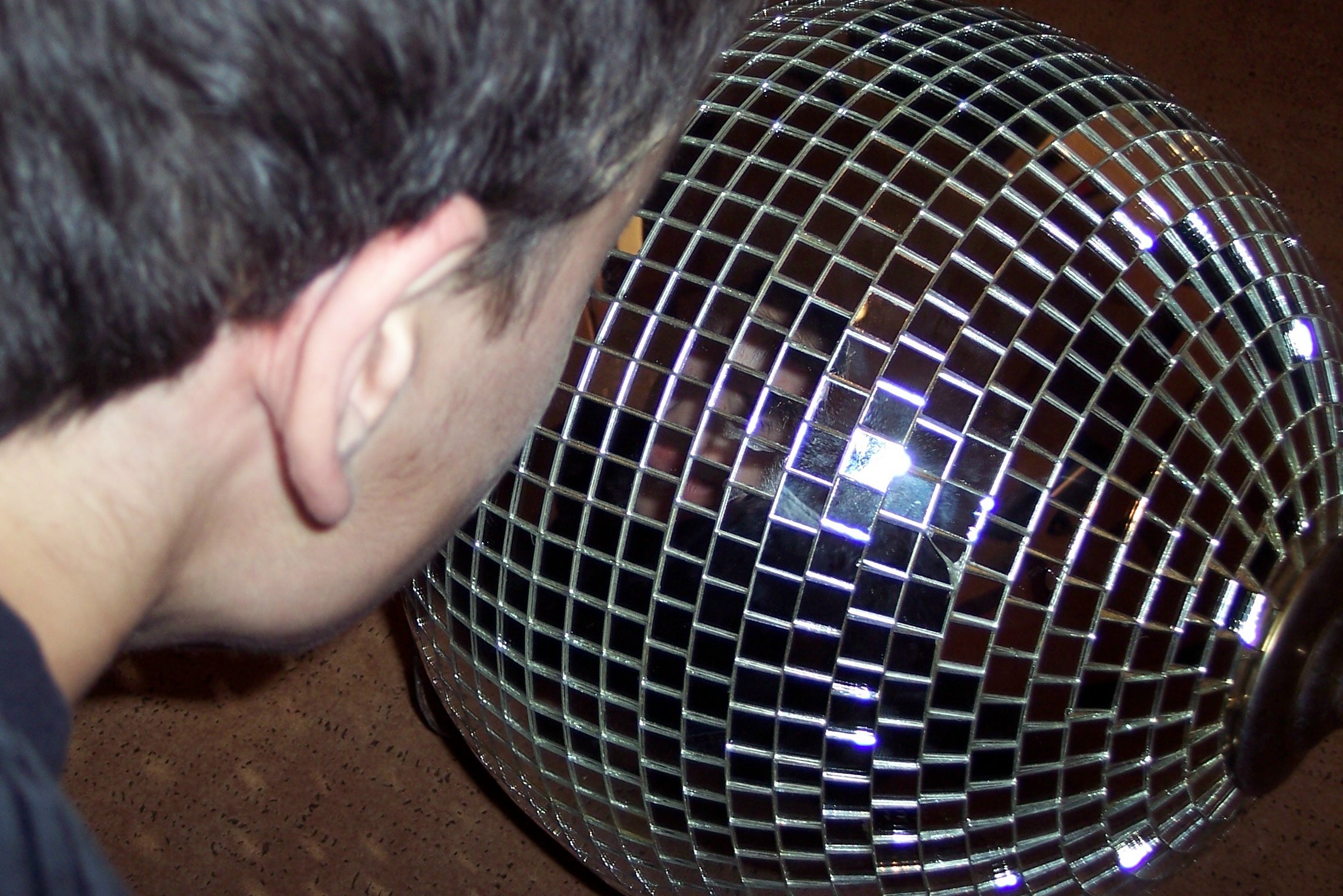
My son’s autistic mind usually takes nothing for granted and makes no assumptions. If he makes a statement such as “This mixes my face” while looking into a disco ball, he will repeat the statement until someone acknowledges him. He does not take for granted that I’ve heard him, that I don’t know that he is expecting a response, or that I don’t have one for him. He doesn’t understand why no one is responding to him, so he repeats himself. He doesn’t mind repeating himself five times while I am formulating a response, especially when his statement is something as, um, unusual as “My brain is the size of twenty yellow lemons,” which he said at age eight. I had no idea where that came from.

That was also the year that he discovered that DVDs were better than VHS tapes because he could choose to watch them with subtitles so that he could keep the volume low and memorize the lines while reading them onscreen. One night, when I started watching a movie (without using subtitles), he asked, “Why you didn’t want it without words?” because he couldn’t imagine how I could deprive myself of this convenience. Growing out of clothing was also a difficult concept that year. When his briefs were getting too tighty-whitey and I had to purchase new ones, I forgot that I should have prepared him. He went to get dressed the next morning and stood there in front of his chest of drawers saying, “What about the 6 underwear?” since I had bought him size 8, and his old ones had been size 6. No assumptions.

Fast forward six years, and he is starting to make little assumptions. He realizes that just because he likes pumpkin pie, it doesn’t mean that he’s going to like pumpkin. (I assure him that many people fall into that category.) And he is learning to recognize sarcasm. A few weeks ago, a friend of the family was visiting on a day that Nigel was supposed to have cleaned his room. Since he hadn’t cleaned it, it looked like a bomb had gone off in there. Nigel was sitting on his bed reading when my friend poked his head in the doorway, surveyed the damage, and said, “It looks good in here.”

Nigel paused for a moment as if considering, and then he said, “I know you’re being sarcastic.”

In spite of the messy room, I was rather proud. And definitely amused.